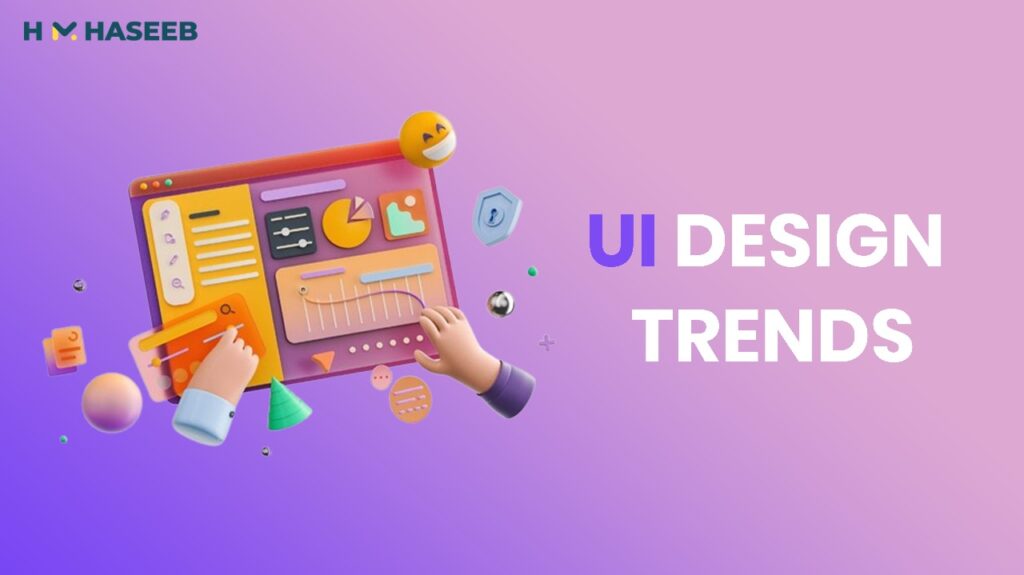
The world of UI Design Trends is evolving faster than ever. In 2025, designers and brands are focusing on simplicity, interactivity, and accessibility to create digital experiences that not only look beautiful but feel natural to use. Whether you’re a beginner designer or a creative professional, staying updated with the latest UI Design Trends is essential for success in this fast-paced digital era.
This article dives deep into the top UI Design Trends you should follow to enhance user engagement, boost usability, and design interfaces that truly connect with users.
1. Minimalism and Clean Interfaces Continue to Dominate
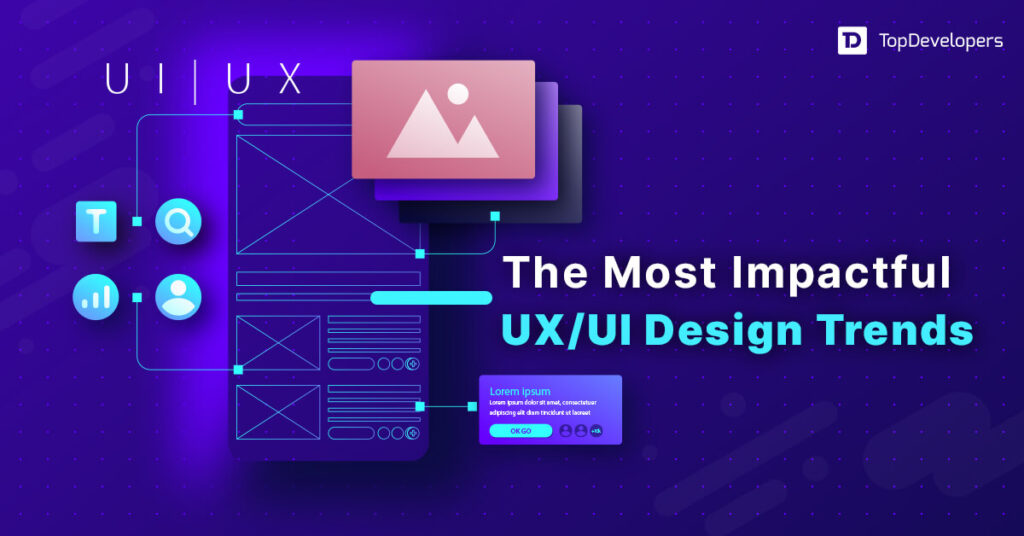
In 2025, minimalism is still one of the most popular UI design trends. Clear layouts, lots of white space, and delicate typography make it easier for consumers to concentrate on the functionality and information that really count. Designers are adopting simplicity, which enhances accessibility and user comfort, in place of cluttered screens.
In addition to being aesthetically pleasing, a minimalist user interface guarantees improved mobile performance and quicker loading times, both of which are essential for contemporary digital experiences.
2. Neumorphism and Glassmorphism for Depth and Realism
Neumorphism and glassmorphism, two popular UI design trends that combine skeuomorphism with contemporary minimalism, are helping designers restore reality. While glassmorphism uses transparency and blur to give interfaces a sleek, futuristic appearance, neumorphic designs replicate actual surfaces with delicate shadows and highlights to create a tactile sensation.
These effects create a balance between visual appeal and usability when used thoughtfully.
3. Motion UI and Micro-Interactions Enhance Engagement
UI Design Trends for 2025 must include animated transitions and micro-interactions. Smooth animations give consumers immediate visual feedback while guiding them through tasks like swiping, pressing buttons, and filling out forms.
Static layouts are given life with Motion UI, which makes websites and apps feel more dynamic, user-friendly, and entertaining. Additionally, it lessens the cognitive burden on users by enhancing navigation clarity.
4. Dark Mode as a Standard UI Option
Dark Mode, which was formerly thought of as an optional theme, is now required for UI Design Trends. It not only lessens eye strain but also adds a contemporary, high end look to interfaces.
In order to guarantee accessibility and aesthetic harmony in both light and dark versions, designers increasingly develop dual color schemes. Dark interfaces also help many users preserve battery life on OLED screens, which is another reason why this trend is still expanding.
5. Voice and Gesture Based Interfaces
Voice and gesture controls are among the most cutting-edge UI design trends, especially with the emergence of wearable technology and AI assistants. Particularly for accessibility focused designs, interfaces that react to hand gestures or speech make interactions more organic.
A more inclusive user experience is made possible by the integration of voice user interface (UI) in smart devices and mobile apps, which enables users to complete tasks without using their hands.
6. Custom Illustrations and 3D Elements
Digital designs gain personality and inventiveness via custom artwork and 3D graphics. This trend is notable because it substitutes distinctive brand-driven art styles with generic stock imagery.
As one of the leading UI Design Trends, 3D elements create depth, realism, and storytelling in interfaces especially in gaming, e-commerce, and education apps.
7. Augmented Reality (AR) and Virtual Reality (VR) Interfaces
The way people engage with digital information is being completely transformed by AR and VR. These immersive technologies offer consumers the most hands on experiences of all UI Design Trends, whether they are exploring 3D settings or virtually trying on clothing.
Designers focusing on AR/VR interfaces need to prioritize intuitive navigation, spatial awareness, and real-time feedback to create seamless immersive interactions.
8. Inclusive and Accessible Design
Accessibility is becoming a crucial element of contemporary UI design trends and is no longer optional. These days, designers make ensuring that websites and apps are accessible to all users, including those with disabilities.
This includes keyboard friendly interfaces, voice navigation, intelligible typography, and appropriate color contrast. In addition to increasing audience reach, inclusive design also raises user satisfaction levels.
9. AI-Powered Personalization in UI
In terms of UI Design Trends for 2025, artificial intelligence has grown to be a significant force. These days, intelligent algorithms examine user behavior and preferences to provide customized layouts, themes, and suggestions.
AI driven interfaces, such as adaptive dashboards and predictive search results, improve user experience and increase engagement and retention.
10. Sustainable and Eco-Friendly Design Choices
AI-driven interfaces, such as adaptive dashboards and predictive search results, improve user experience and increase engagement and retention.
This approach aligns with global environmental goals while providing faster, cleaner, and more responsible digital experiences.
Why Following UI Design Trends Matters
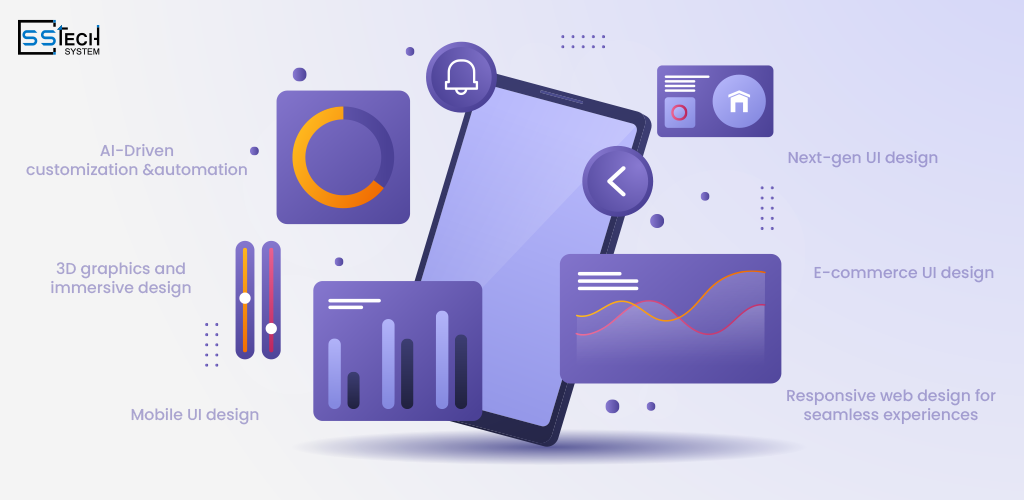
Designers may create relevant, user friendly products that meet current expectations by keeping up with UI design trends. Additionally, it enhances employment prospects because companies choose experts who comprehend user psychology, accessibility guidelines, and contemporary design systems.
By mastering these UI Design Trends, you can create digital experiences that feel both futuristic and human-centered.
Conclusion:
You shouldn’t stand stagnant because the digital world is always changing. UI Design Trends will continue to change how people interact with websites and apps as technology advances. Achieving success requires striking a balance between innovation, usability, and originality while keeping the user at the center of every choice.
Because meaningful digital experiences will be the focus of UI design in the future, keep informed, stay motivated, and always design with purpose.
FAQs:
Q1. What are the top UI Design Trends in 2025?
Some of the top UI Design Trends include minimalism, dark mode, neumorphism, voice interfaces, AI personalization, and AR/VR experiences.
Q2. Why are UI Design Trends important?
They help designers stay competitive, enhance usability, and ensure that interfaces match modern user expectations.
Q3. How can I learn about new UI Design Trends?
Follow design blogs, attend webinars, and join design communities like Dribbble and Behance to stay updated with evolving trends.
Q4. Which tools are best for implementing UI Design Trends?
Figma, Adobe XD, Sketch, and Framer are top tools for applying modern UI Design Trends in projects.