

First impressions are more important than ever in the digital age. Users make snap decisions on whether or not to stay on a website, app, or e-commerce platform. Herein lies the importance of UI/UX design. Any digital product can succeed or fail based on its user interface and user experience. Delivering seamless, captivating, and user-friendly experiences is the key of UI/UX. They are essential to user retention, satisfaction, and general business success.
In this detailed guide, we’ll explore the importance of UI/UX design in creating strong brand identities, improving digital product performance, and delivering engaging user experiences across all industries.
What Is UI/UX Design?
It’s crucial to comprehend the distinction between UI and UX before delving further into the importance of UI/UX design. The visual and interactive components of a product such as buttons, colors, icons, spacing, and layout are the emphasis of UI.
The entire experience and emotion people get when interacting with a product is the focus of UX. To put it simply, UI is how it looks, and UX is how it functions and understanding this difference is key to realizing the overall the importance of UI/UX in creating successful digital experiences.
The Importance of UI/UX Design
The importance of UI/UX design goes far beyond visual aesthetics. It shapes the entire user journey and emotional connection between your audience and your brand. A well crafted design determines how users perceive, interact with, and trust your digital presence.
The importance of UI/UX design lies in its power to create meaningful, intuitive, and enjoyable digital experiences that keep users engaged and satisfied.
1. Creates a Lasting First Impression
Your digital handshake is your UI/UX. A neat and appealing design instantly gives users a sense of comfort and confidence. Poor design, on the other hand, turns off visitors. User-friendly navigation and a well-organized interface entice visitors to remain longer and take use of more of your offerings.
2. Improves User Satisfaction
Smooth navigation, easy access to information, and fast load times all enhance user satisfaction. Users are more likely to return when they can accomplish their goals with little effort thanks to a pleasant user experience. A better user experience makes your product stand out in crowded markets. Companies that put UI/UX first have a competitive advantage.
3. Increases Conversions and Sales
A carefully thought-out UI/UX leads users through the conversion funnel with ease. Every design element, from obvious calls to action to user friendly layouts, encourages consumers to proceed to the next step, whether it be signing up, making a purchase, or engaging.
Conversion rates naturally rise when users have a positive experience.
4. Builds Brand Trust and Credibility
People judge your brand by its design quality. A professional UI/UX design communicates reliability and attention to detail, while poor design signals carelessness. A consistent and appealing interface helps build trust, authority, and credibility in your niche.
The Impact of UI/UX on Business Growth
The success of any business is directly influenced by the importance of UI/UX design, as it determines how users connect with your brand at every touchpoint. An exceptional and thoughtfully designed interface not only attracts attention but also builds trust, enhances satisfaction, and drives conversions.
- Better Engagement Metrics
Intuitive navigation and appealing visuals reduce bounce rates and improve user retention. Visitors spend more time exploring when the experience feels effortless.
- Customer Retention
A delightful experience creates a strong emotional connection between users and your brand, encouraging them to return again and again. This highlights the importance of UI/UX design, as a positive interaction not only builds trust but also inspires users to share their satisfaction with others.
- Competitive Advantage
In crowded markets, a superior user experience sets your product apart. Businesses that prioritize UI/UX gain a strategic edge over competitors.
Understanding the Difference Between UI and UX
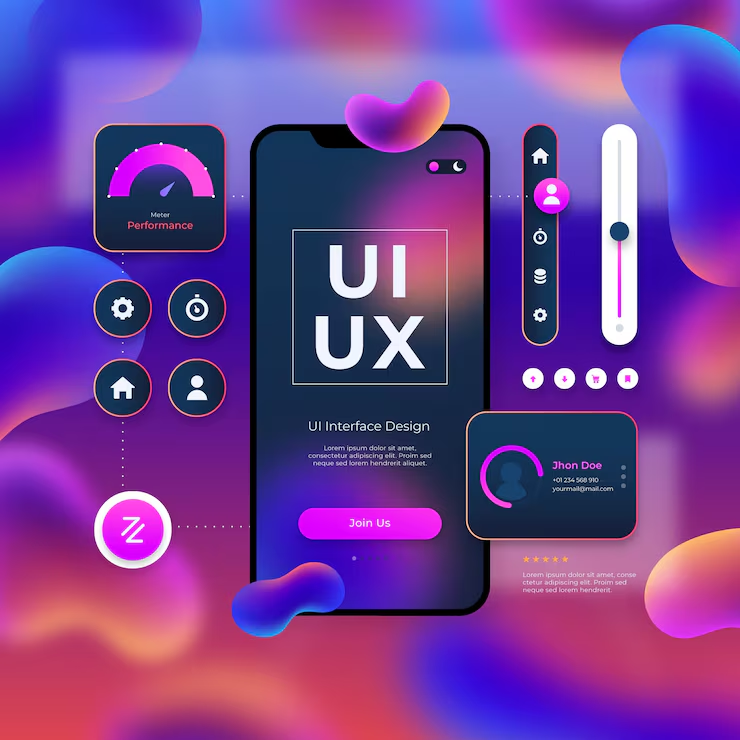
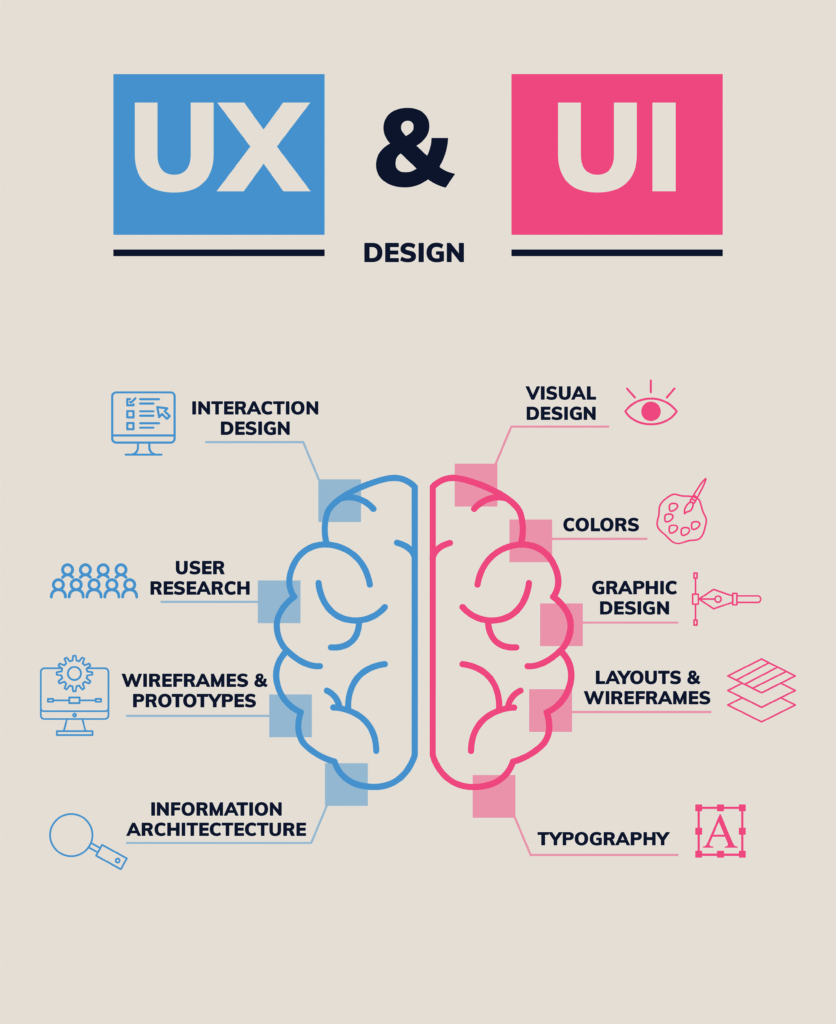
It’s important to understand the difference between UI and UX. The visual and interactive elements of a product, such as buttons, icons, colors, typography, spacing, and layout, are the emphasis of UI (User Interface). It dictates the appearance and feel of your product. Conversely, user experience, or UX, focuses on how a user feels when using a product. It encompasses general contentment, accessibility, efficiency, and ease of use.
Key Elements of UI/UX Design
To build exceptional digital products that truly reflect the importance of UI/UX design, focus on these fundamental elements that enhance usability, visual appeal, and overall user satisfaction.
1. User Research
Understanding your audience is the first step. Analyze their goals, pain points, and behavior to create designs that truly meet their needs.
2. Simplicity
Avoid unnecessary complexity. Clean and minimal designs help users find what they’re looking for easily.
3. Consistency
Use consistent colors, fonts, and layouts across all pages to create a unified, recognizable brand identity.
The Future of UI/UX Design
The key to the future of UI/UX design is customization and flexibility. Digital experiences are getting smarter and more human centered thanks to technologies like voice interfaces, AR, VR, and AI. To develop smooth user journeys, designers will keep emphasizing emotion, intuition, and simplicity.
Conclusion
At the core of digital success is the importance of UI/UX design. It influences how customers engage with your brand and whether they decide to stick around or go. Satisfaction, trust, and loyalty are increased by good UI/UX, which eventually improves your business’s growth, reputation, and income.
Any company that want to be successful online must now make UI/UX investments as a strategic need.
Frequently Asked Questions (FAQs)
1. What is the importance of UI/UX design?
UI/UX design ensures that a digital product is visually appealing, easy to use, and enjoyable. It directly affects user satisfaction, retention, and conversion rates.
2. How does good UI/UX design improve business performance?
A well designed interface enhances customer trust and reduces bounce rates, leading to more engagement and higher sales conversions.
3. What is the difference between UI and UX design?
UI focuses on how a product looks (visuals and layout), while UX focuses on how it works (user journey and experience). Both work together to create a complete digital experience.
4. Why should companies invest in UI/UX design early?
Investing early helps identify usability issues before development, saving time, money, and effort while ensuring a smooth product launch.
5. What are the key principles of good UI/UX design?
Key principles include simplicity, consistency, user-centered research, accessibility, and responsiveness all designed to create a positive and efficient user experience.